
Choosing the correct pond pump is essential for maintaining healthy water circulation, efficient filtration, and crystal-clear water. Our Pond Pump Calculator helps you instantly calculate the ideal pond pump size (GPH) based on your pond volume, turnover rate, waterfalls, filters, and system requirements.
Whether you’re setting up a koi pond, garden pond, backyard pond, or decorative water feature, this calculator provides a fast and reliable pump size recommendation using standard pond engineering principles. Simply enter your pond dimensions, and you’ll receive an accurate flow rate (GPH) recommendation to keep your pond clean, oxygen-rich, and properly circulated.
Unlike manual calculations, this tool eliminates guesswork by automatically estimating the recommended pump flow rate, making it easier to choose a pump that matches your pond’s size and filtration needs.
✔️ Based on Standard Pond Turnover Guidelines
✔️ Accurate GPH & Pump Size Recommendations
✔️ Supports Koi Ponds, Garden Ponds & Waterfalls
✔️ Beginner-Friendly with Instant Results
✔️ Free, Fast & No Registration Required
Enter your pond details below to instantly calculate the recommended pond pump size, flow rate (GPH), and turnover rate for optimal water circulation and filtration.
Why Use This Pond Pump Calculator?
Choosing the correct pond pump size is one of the most important steps in building or maintaining a healthy pond. An undersized pump can lead to poor water circulation, inadequate filtration, and low oxygen levels, while an oversized pump may waste energy and increase operating costs.
Our Pond Pump Calculator takes the guesswork out of pump sizing by calculating the recommended flow rate (GPH) based on your pond volume, turnover rate, and system requirements. Whether you have a koi pond, garden pond, waterfall, or decorative water feature, this calculator helps you select a pump that delivers reliable performance and efficient water circulation.
Key Benefits
✅ Accurate Pump Size Calculation – Instantly calculate the recommended pond pump size (GPH) using your pond volume and the ideal turnover rate.
⚡ Instant, Hassle-Free Results – No complicated formulas or manual calculations—simply enter your pond details and receive accurate recommendations in seconds.
🧠 Built on Standard Pond Sizing Principles – Uses widely accepted pond turnover guidelines and practical hydraulic calculations for dependable results.
💧 Improves Water Circulation & Filtration – Promotes consistent water movement, supports biological filtration, and helps maintain cleaner, healthier pond water.
🐟 Supports Fish & Plant Health – Proper circulation improves oxygen levels, creating a healthier environment for koi, goldfish, aquatic plants, and beneficial bacteria.
🌿 Helps Reduce Algae Growth – Good water flow minimizes stagnant areas where algae are more likely to develop.
⚙️ Works for Multiple Pond Types – Suitable for koi ponds, backyard ponds, wildlife ponds, fountains, waterfalls, and decorative water features.
💡 Saves Energy & Operating Costs – Selecting the right-sized pump helps avoid unnecessary electricity usage while maximizing pump efficiency.
👨🌾 Beginner-Friendly & Expert Approved – Designed for homeowners, DIY pond builders, landscapers, and pond maintenance professionals looking for accurate pump sizing.
💧 Pond Pump Calculator
Standard Mode - Quick & Easy
Pond Dimensions
Pond Type & Requirements
Enter your pond details and click Calculate
1. Pond Dimensions
2. System Configuration
3. Pump Type
4. Performance Factors
5. NPSH (External Pumps)
5. Operating Cost
Enter pond details and click Calculate Professional
Understanding Your Pond Pump Calculator Results
Once you’ve entered your pond details, the calculator provides several key values to help you choose the right pond pump. Here’s what each result means and how it affects your pond’s overall performance.
Required GPH (Gallons Per Hour)
The Required GPH is the minimum flow rate your pond pump should deliver each hour. It is calculated using your pond’s total water volume and the recommended turnover rate to ensure efficient water circulation and filtration.
A pump with the correct GPH helps maintain clear water, supports beneficial bacteria, and provides adequate oxygen for fish and aquatic plants.
Recommended Pump Size Range
Instead of suggesting a single pump, the calculator provides a recommended pump size range. This gives you the flexibility to choose a pump that matches your filtration system, waterfall, fountain, or future pond upgrades.
Selecting a pump within the recommended range helps prevent poor circulation caused by undersized pumps and unnecessary energy consumption from oversized pumps.
Water Turnover Rate
The turnover rate shows how often your pond’s entire water volume should circulate through the filtration system.
In most ponds, a complete turnover every 1 to 2 hours is recommended. Koi ponds, ponds with heavy fish loads, or ponds with waterfalls may require faster circulation to maintain excellent water quality and oxygen levels.
Head Height Impact
The calculator also considers head height, which is the vertical distance the pump must push water. As head height increases, the actual flow rate (GPH) delivered by the pump decreases.
If your pond includes a waterfall, stream, or elevated filter, choosing a pump with enough capacity to compensate for head loss is essential for maintaining the desired water flow.
Estimated Energy Usage
The estimated energy usage helps you understand how your pump size may affect electricity consumption over time. Choosing a correctly sized, energy-efficient pump can reduce operating costs while maintaining reliable water circulation throughout the year.
A properly matched pump often provides better long-term performance than simply choosing the largest available model.
Pump Recommendation
Based on your pond volume, turnover rate, and system requirements, the calculator recommends an appropriate pond pump size and flow rate (GPH).
Use this recommendation as a starting point when selecting a pump. If your pond includes waterfalls, long plumbing runs, UV clarifiers, or multiple filtration components, consider choosing a model that delivers the required flow rate after accounting for total dynamic head (TDH).
Pro Tip: Always compare your calculator results with the manufacturer’s pump performance chart. Pump ratings are typically measured at zero head, while the actual flow rate decreases as head height and plumbing resistance increase.
🧠 How the Pond Pump Calculator Works: Step-by-Step Guide
Our pond pump calculator uses real engineering principles to provide precise results for any pond setup — from small backyard koi ponds to large water features. No guesswork, no assumptions — just accurate, actionable guidance.
✔️ Accurate • ✔️ Transparent • ✔️ Tested by pond professionals
- ⚗️ Step 1
- ⚗️ Step 2
- ⚗️ Step 3
- ⚗️ Step 4
- ⚗️ Step 5
- ⚗️ Step 6
Calculate Pond Volume (Gallons & Surface Area)
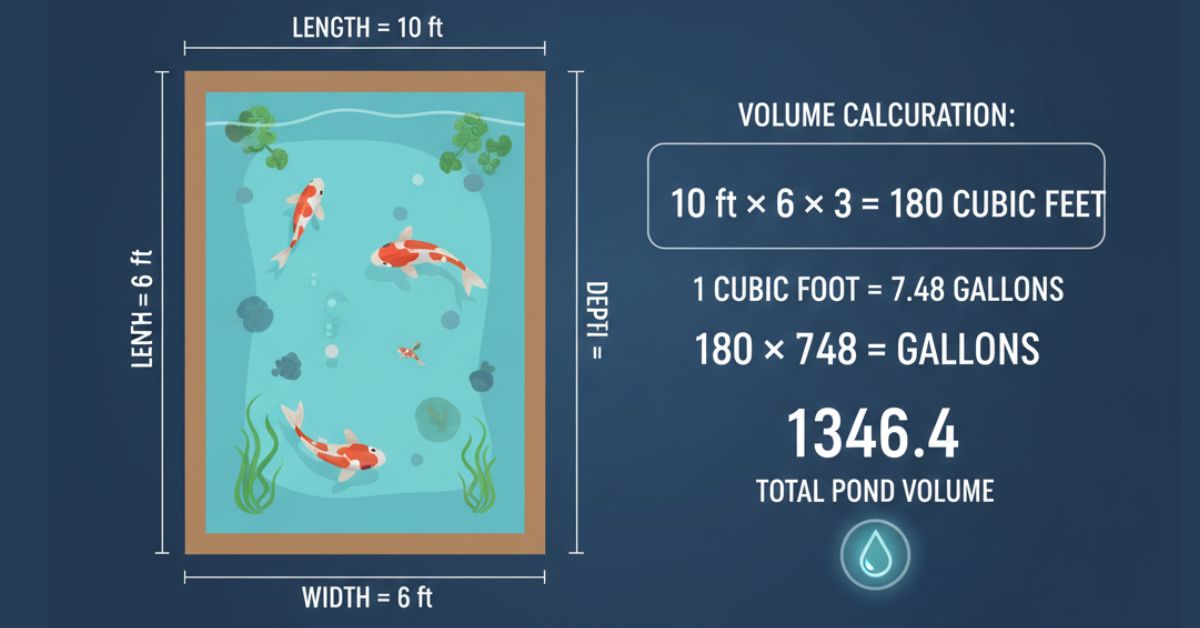
 Calculates the total water volume in gallons based on your pond’s shape, length, width, and depth.
 This foundational step ensures correct pump sizing and water circulation. Accurately measuring your pond prevents undersized pumps, cloudy water, and stressed fish.
Determine Ideal Turnover Rate
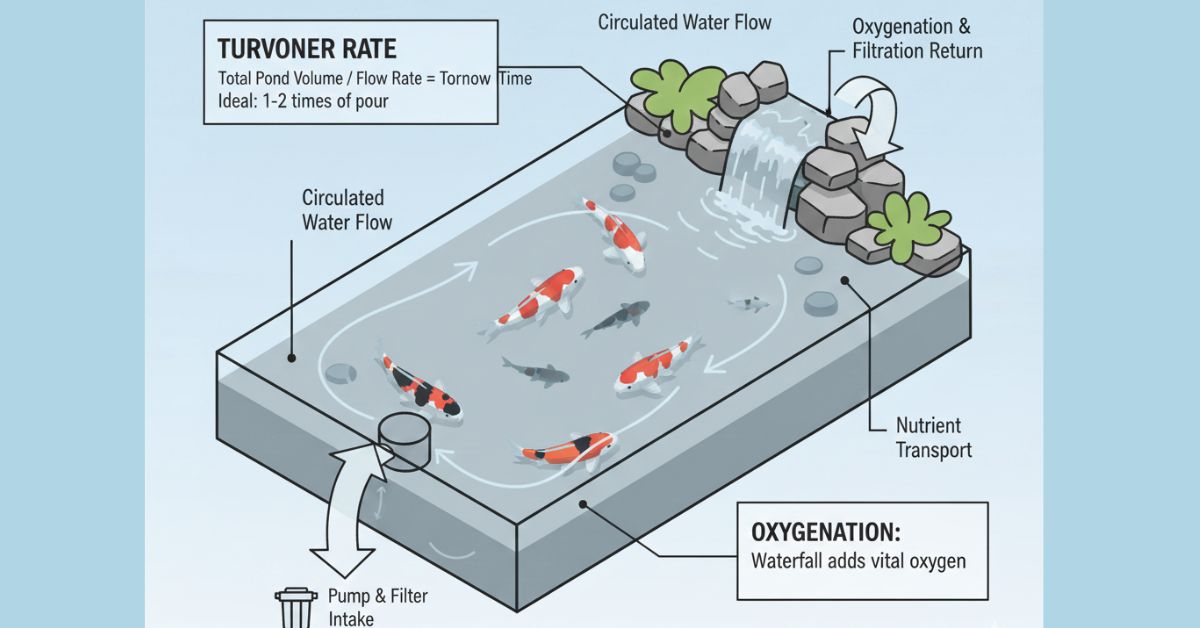
 Applies the ideal water-circulation rate depending on pond type (Koi, Water Garden, Waterfall, etc.). Ensures sufficient oxygenation and filtration. Underestimating turnover can reduce water clarity and harm fish health.
Adjust for Static Head & Water Feature Height
 Accounts for vertical lift from waterfalls, fountains, or raised outlets. Adjusts pump flow to match real-world height loss, so your pond features operate as intended.
Account for Friction & System Losses (Pro Mode)
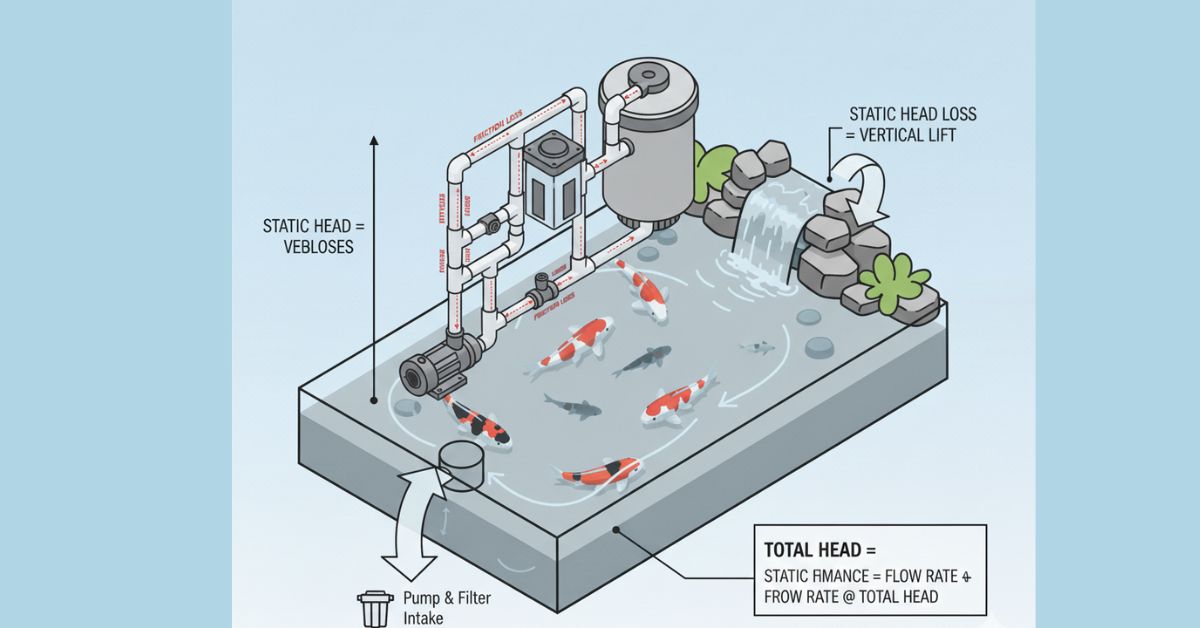
 Considers pipe length, elbows, valves, and filter resistance to calculate Total Dynamic Head (TDH). Real-world flow is reduced by friction; this step ensures your pump meets required performance even in complex systems.
Calculate Efficiency & Estimated Power Cost
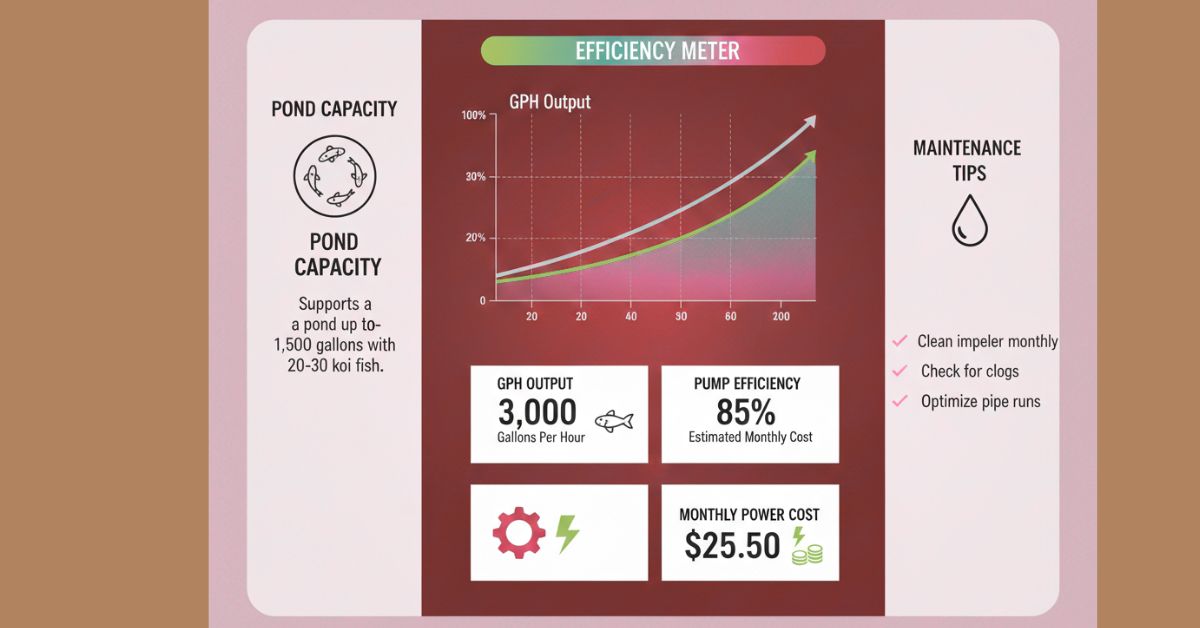
 Calculates effective flow after pump efficiency and estimates monthly electricity cost. Helps you see the true operating cost and actual pump performance before purchasing, allowing for energy-efficient, cost-effective choices.
Recommended Pump Size, Flow, and Fish Capacity
 The final output provides:
 Recommended Pump Size (GPH)
 Total Dynamic Head (TDH) Estimated Power Use & Monthly Cost
 Suggested Fish Capacity
 Maintenance Tips
With these insights, you can confidently choose the right pump, optimize energy use, and maintain a healthy pond ecosystem.
How to Measure Your Pond Accurately
Before using the Pond Pump Calculator, you need accurate pond measurements. The recommended pump size (GPH) depends directly on your pond’s volume, so even small measurement errors can affect the final recommendation.
Use a tape measure or laser distance meter to record your pond’s dimensions. Measure in feet or meters, then enter the values into the calculator for the most accurate pump sizing results.
📐 Rectangle Pond
Rectangular ponds are the easiest to measure. Record the length, width, and average depth. If your pond has different depths, measure the deepest and shallowest points, then calculate the average depth.
You’ll need:
Length
Width
Average Depth
Best for: Formal garden ponds, raised ponds, and rectangular koi ponds.
⭕ Circular Pond
For a circular pond, measure the diameter (the distance from one side of the pond to the other through the center) and the average depth.
You’ll need:
Diameter
Average Depth
Best for: Circular fish ponds, patio ponds, and decorative water features.
🥚 Oval Pond
Measure the longest length, the widest width, and the average depth. Oval ponds are common in residential landscapes and can be measured using the same basic approach as rectangular ponds.
You’ll need:
Maximum Length
Maximum Width
Average Depth
Best for: Backyard ponds, wildlife ponds, and ornamental gardens.
🌿 Kidney-Shaped Pond
Kidney-shaped ponds have curved edges, so measurements require a simple estimate. Measure the longest length, the widest width, and the average depth. The calculator uses an adjusted shape factor to estimate the pond’s total volume more accurately.
You’ll need:
Maximum Length
Maximum Width
Average Depth
Best for: Natural-looking koi ponds and landscape water gardens.
🌊 Irregular Pond
For irregular ponds, divide the pond into smaller sections such as rectangles, circles, or ovals. Measure each section separately, estimate the volume of each area, and combine the totals for the most accurate result.
If your pond has shelves or multiple depth zones, calculate the average depth by measuring several locations across the pond.
You’ll need:
Multiple Length & Width Measurements
Average Depth
Section-by-Section Estimates
Best for: Natural ponds, freeform ponds, streams, and custom water features.
💡 Tips for More Accurate Measurements
Measure the pond when the water level is at its normal operating height.
Use average depth instead of the deepest point for more accurate calculations.
Measure in a straight line and record all dimensions before entering them into the calculator.
For ponds with waterfalls or streams, calculate only the main pond volume unless you want to include the additional water capacity.
Double-check your measurements before selecting a pump, as accurate dimensions lead to a more reliable pond pump size (GPH) recommendation.
Pond Pump Size Formula
The Pond Pump Calculator uses standard pond engineering principles to estimate the correct pump size (GPH) for your pond. These formulas are commonly used to calculate water circulation, turnover rate, head height adjustments, and flow loss, helping you choose a pump that provides reliable filtration and healthy water movement.
1. Main Pond Pump Flow Rate Formula
Formula
GPH = Pond Volume (Gallons) ÷ Turnover Time (Hours)
What it means
This is the primary formula used to calculate the minimum pump flow rate (GPH) required for your pond. It determines how much water the pump should circulate every hour to keep the pond properly filtered and oxygenated.
Example
If your pond holds 3,000 gallons and you want a complete water turnover every 1 hour, you’ll need a pump capable of delivering approximately 3,000 GPH.
2. Pond Water Turnover Formula
Formula
Turnover Time = Pond Volume (Gallons) ÷ Pump Flow Rate (GPH)
What it means
This formula shows how long it takes for your pump to circulate the pond’s entire water volume once. Most garden ponds perform well with a turnover every 1–2 hours, while koi ponds often benefit from faster circulation.
Example
A 2,000-gallon pond using a 2,000 GPH pump has a turnover time of approximately 1 hour.
3. Waterfall Flow Rate Formula
Formula
Recommended GPH = Waterfall Width (Inches) × Desired Flow Rate per Inch
What it means
If your pond includes a waterfall, you’ll need additional flow to create the appearance you want. Wider waterfalls require higher pump output to produce a smooth and attractive sheet of water.
General Guidelines
50–75 GPH per inch – Gentle trickle
75–100 GPH per inch – Moderate waterfall
100–150 GPH per inch – Strong cascading waterfall
Example
A 24-inch waterfall with a moderate flow requires approximately 1,800–2,400 GPH.
4. Total Dynamic Head (TDH) Formula
Formula
TDH = Vertical Head + Friction Loss + Minor Losses
What it means
Total Dynamic Head (TDH) represents the total resistance your pump must overcome. It includes the vertical lift from the pond to the outlet, friction inside pipes, and additional resistance from fittings, valves, filters, and UV clarifiers.
A higher TDH reduces the actual flow rate delivered by the pump, making it essential to choose a pump that maintains the required GPH at your system’s operating head.
5. Pipe Friction Loss Formula
Formula
Total Flow Loss = Pump Flow − Friction Losses
What it means
As water travels through pipes, elbows, valves, and filters, resistance reduces the actual flow rate reaching your waterfall or filtration system. Longer pipe runs and smaller pipe diameters create greater friction losses.
Using adequately sized plumbing and minimizing unnecessary bends helps improve pump efficiency and maintain the desired water circulation.
Pro Tip
Pump manufacturers usually advertise maximum GPH at zero head. Always compare your calculator results with the pump’s performance curve to verify that it can still deliver the required flow rate after accounting for Total Dynamic Head (TDH) and pipe friction losses. Choosing a pump based on real operating conditions ensures better filtration, healthier fish, and lower long-term operating costs.
Real-Life Pond Pump Size Examples
The examples below show how the Pond Pump Calculator determines the recommended pump size (GPH) for different pond volumes and applications. Actual pump selection may vary depending on waterfalls, filters, plumbing length, and Total Dynamic Head (TDH).
Example 1: 500-Gallon Pond
Pond Volume: 500 gallons
Recommended Turnover: 1 hour
Calculation
500 ÷ 1 = 500 GPH
Recommended Pump Size
Choose a pump that delivers 500–700 GPH after accounting for head height and filtration losses.
Ideal For
Small backyard ponds
Patio ponds
Goldfish ponds
Decorative water features
Example 2: 1,000-Gallon Pond
Pond Volume: 1,000 gallons
Recommended Turnover: 1 hour
Calculation
1,000 ÷ 1 = 1,000 GPH
Recommended Pump Size
A pump rated between 1,000 and 1,500 GPH is suitable for most garden ponds with standard filtration.
Ideal For
Medium-sized garden ponds
Small koi ponds
Ornamental ponds
Example 3: 2,500-Gallon Pond
Pond Volume: 2,500 gallons
Recommended Turnover: 1 hour
Calculation
2,500 ÷ 1 = 2,500 GPH
Recommended Pump Size
A pump delivering 2,500–3,200 GPH provides efficient circulation for larger ponds, especially when connected to biological filters or UV clarifiers.
Ideal For
Large backyard ponds
Mixed fish ponds
Landscape water gardens
Example 4: 5,000-Gallon Pond
Pond Volume: 5,000 gallons
Recommended Turnover: 1 hour
Calculation
5,000 ÷ 1 = 5,000 GPH
Recommended Pump Size
Select a pump capable of delivering 5,000–6,500 GPH after accounting for head height, pipe friction, waterfalls, and filtration equipment.
Ideal For
Large koi ponds
Professional pond installations
Heavy fish loads
Example 5: Koi Pond Pump Size
Koi produce significantly more waste than most ornamental fish, making strong water circulation essential.
Example Setup
Pond Volume: 3,000 gallons
Recommended Turnover: 45–60 minutes
Recommended Pump Size
Choose a pump capable of delivering approximately 3,000–4,500 GPH, depending on your filtration system and head height.
Why It Matters
Higher circulation helps maintain water quality, supports beneficial bacteria, and keeps dissolved oxygen levels high for healthy koi.
Example 6: Waterfall Pond Pump Size
Waterfalls require additional flow beyond basic filtration to achieve the desired visual effect.
Example Setup
Pond Volume: 2,000 gallons
Waterfall Width: 24 inches
Recommended Pump Size
For both proper filtration and a moderate waterfall, a pump delivering approximately 2,500–3,500 GPH is typically recommended.
If your waterfall has significant vertical lift or long plumbing runs, select a pump that maintains the required flow after accounting for Total Dynamic Head (TDH).
Quick Reference Table
| Pond Type | Typical Pond Size | Recommended Pump Size |
|---|---|---|
| Small Pond | 500 gallons | 500–700 GPH |
| Garden Pond | 1,000 gallons | 1,000–1,500 GPH |
| Large Pond | 2,500 gallons | 2,500–3,200 GPH |
| Extra Large Pond | 5,000 gallons | 5,000–6,500 GPH |
| Koi Pond | Depends on fish load | 1–1.5× pond volume per hour |
| Waterfall Pond | Depends on waterfall width | Add extra GPH for waterfall flow |
Pond Pump Size Chart
The table below provides general pond pump size recommendations based on pond volume and the standard 1-hour water turnover rate. These values are intended as a practical starting point for selecting the right pond pump (GPH). If your pond includes waterfalls, UV clarifiers, long pipe runs, or elevated filtration systems, you may need a pump with a higher rated flow to compensate for Total Dynamic Head (TDH) and friction losses.
| Pond Volume (Gallons) | Recommended Flow Rate (GPH) | Standard Turnover Rate | Suggested Pump Size |
|---|---|---|---|
| 250 | 250 GPH | 1 Hour | 250–400 GPH |
| 500 | 500 GPH | 1 Hour | 500–700 GPH |
| 750 | 750 GPH | 1 Hour | 750–1,000 GPH |
| 1,000 | 1,000 GPH | 1 Hour | 1,000–1,500 GPH |
| 1,500 | 1,500 GPH | 1 Hour | 1,500–2,000 GPH |
| 2,000 | 2,000 GPH | 1 Hour | 2,000–2,700 GPH |
| 2,500 | 2,500 GPH | 1 Hour | 2,500–3,200 GPH |
| 3,000 | 3,000 GPH | 1 Hour | 3,000–4,000 GPH |
| 4,000 | 4,000 GPH | 1 Hour | 4,000–5,200 GPH |
| 5,000 | 5,000 GPH | 1 Hour | 5,000–6,500 GPH |
| 7,500 | 7,500 GPH | 1 Hour | 7,500–9,000 GPH |
| 10,000 | 10,000 GPH | 1 Hour | 10,000–12,000 GPH |
How to Use This Chart
Find your pond’s total water volume in gallons.
Match it with the recommended flow rate (GPH).
Select a pump within the suggested size range.
If your system includes a waterfall, stream, UV clarifier, or significant head height, choose a pump near the upper end of the recommended range.
Always verify the manufacturer’s pump performance curve, as the actual flow rate decreases when water is pumped uphill or through plumbing and filtration equipment.
Pro Tip: A correctly sized pond pump provides better water circulation, cleaner filtration, healthier fish, and lower electricity costs than simply choosing the largest pump available. For the most accurate recommendation, use the Pond Pump Calculator above, which factors in your pond dimensions and system setup rather than relying solely on this general sizing chart.
Recommended Pond Water Turnover Rate
The water turnover rate is how long it takes your pond pump to circulate the entire pond volume once. Choosing the right turnover rate helps maintain clean water, efficient filtration, and healthy oxygen levels for fish and aquatic plants.
| Pond Type | Recommended Turnover Rate |
|---|---|
| Wildlife Pond | Every 2–4 hours |
| Garden Pond | Every 1–2 hours |
| Koi Pond | Every 45–60 minutes |
| Pond with Waterfall | Every 1 hour |
| Heavily Stocked Pond | Every 30–60 minutes |
Tip: If your pond has koi, waterfalls, or heavy filtration, choose a faster turnover rate for better water quality.
What Is Total Dynamic Head (TDH)?
Total Dynamic Head (TDH) is the total resistance your pond pump must overcome to move water through the system. It includes the vertical lift (head height), pipe friction, and resistance from filters, UV clarifiers, valves, and fittings.
As TDH increases, the actual flow rate (GPH) decreases. That’s why it’s important to choose a pump that can deliver the required flow at your pond’s operating head—not just its maximum rated GPH.
Tip: Always check the manufacturer’s pump performance chart to ensure the pump provides the required GPH after accounting for TDH.
Common Pond Pump Sizing Mistakes
Choosing the wrong pond pump can reduce water quality, increase energy costs, and shorten your pump’s lifespan. Avoid these common mistakes when selecting a pond pump:
❌ Choosing a Pump Based Only on Pond Volume – Always consider head height (TDH), waterfalls, and filtration equipment, not just pond size.
❌ Ignoring Water Turnover Rate – A pump with insufficient flow may not circulate the entire pond often enough, leading to poor filtration and stagnant water.
❌ Overlooking Head Height – Every foot of vertical lift reduces the pump’s actual flow rate (GPH). Check the pump’s performance chart before purchasing.
❌ Selecting an Oversized Pump – A pump that’s too powerful can waste electricity, create excessive water movement, and increase operating costs.
❌ Using Undersized Plumbing – Small pipes and multiple bends restrict water flow and reduce pump efficiency.
❌ Not Planning for Future Upgrades – If you intend to add a waterfall, UV clarifier, or additional filtration later, choose a pump with enough capacity to support those upgrades.
Pro Tip: Use the Pond Pump Calculator together with the manufacturer’s performance chart to select a pump that delivers the required GPH under real operating conditions.
Ready to Find the Right Pond Pump?
Choosing the correct pond pump size doesn’t have to be complicated. Simply enter your pond dimensions into the Pond Pump Calculator to receive an instant recommendation for the ideal pump size (GPH), water turnover rate, and flow requirements based on your pond’s unique setup.
Whether you’re building a new koi pond, upgrading a garden pond, or improving water circulation for a waterfall or filtration system, this calculator helps you select the right pump with confidence.